

Human-Centric Lighting That Improves Focus
What it actually delivers, when it’s worth the investment, and where it drives measurable performance For years, workplace lighting has been designed with a simple assumption: more light equals better performance. The reality is the opposite.
Over-lit environments—common across offices from the 1960s through to today—have been shown to create glare, discomfort, and visual fatigue, often reducing productivity rather than enhancing it . Yet despite advances in technology and research, many workplaces still rely on this outdated model.
Human-centric lighting represents a fundamental shift. It moves lighting away from a uniform, one-size-fits-all solution and reframes it as a performance-driven system, designed around how people actually work.
Designing for the way people work—not the way buildings are lit The modern workplace is defined by a contradiction.
Most people now work across two primary modes:
Viewing digital screens
Reading or interacting with physical materials
These tasks require entirely different lighting conditions. Screen-based work performs best in low ambient light, while reading and detailed tasks require significantly higher illumination levels .
Traditional lighting systems cannot resolve this conflict. When lighting is set high enough for reading, it creates glare on screens. When it is reduced for screen use, it becomes insufficient for detail work. The result is a compromised environment that supports neither task well.
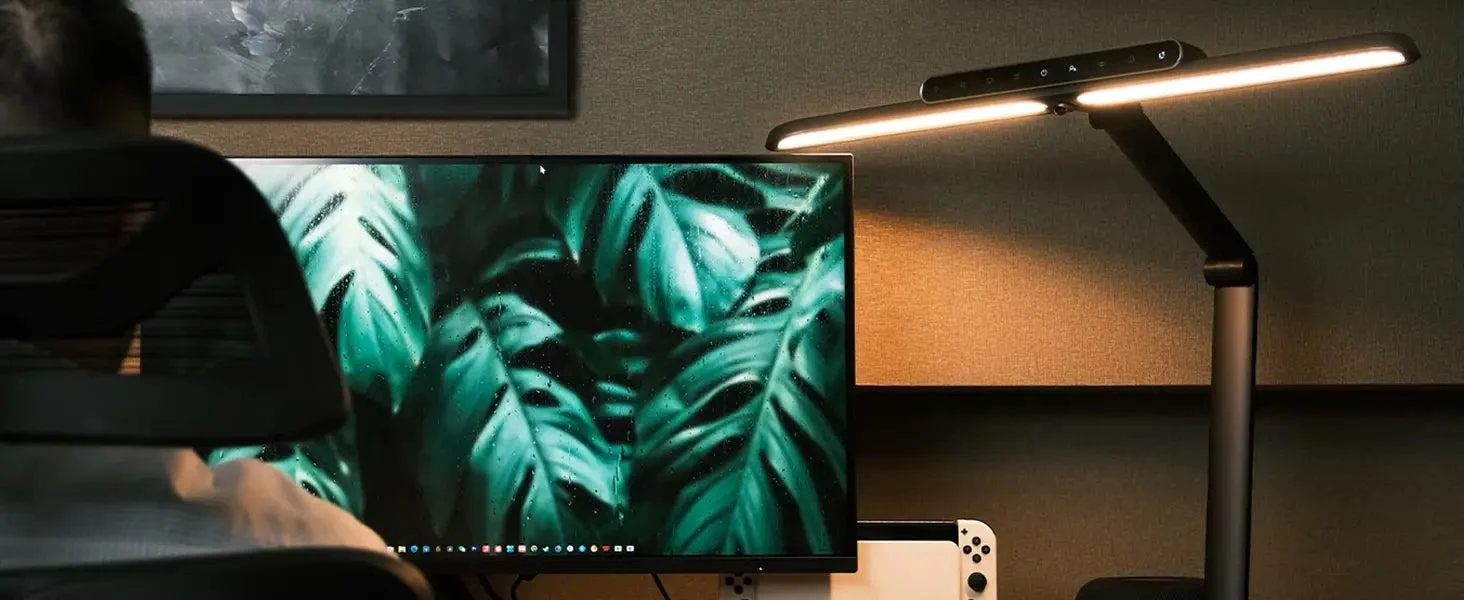
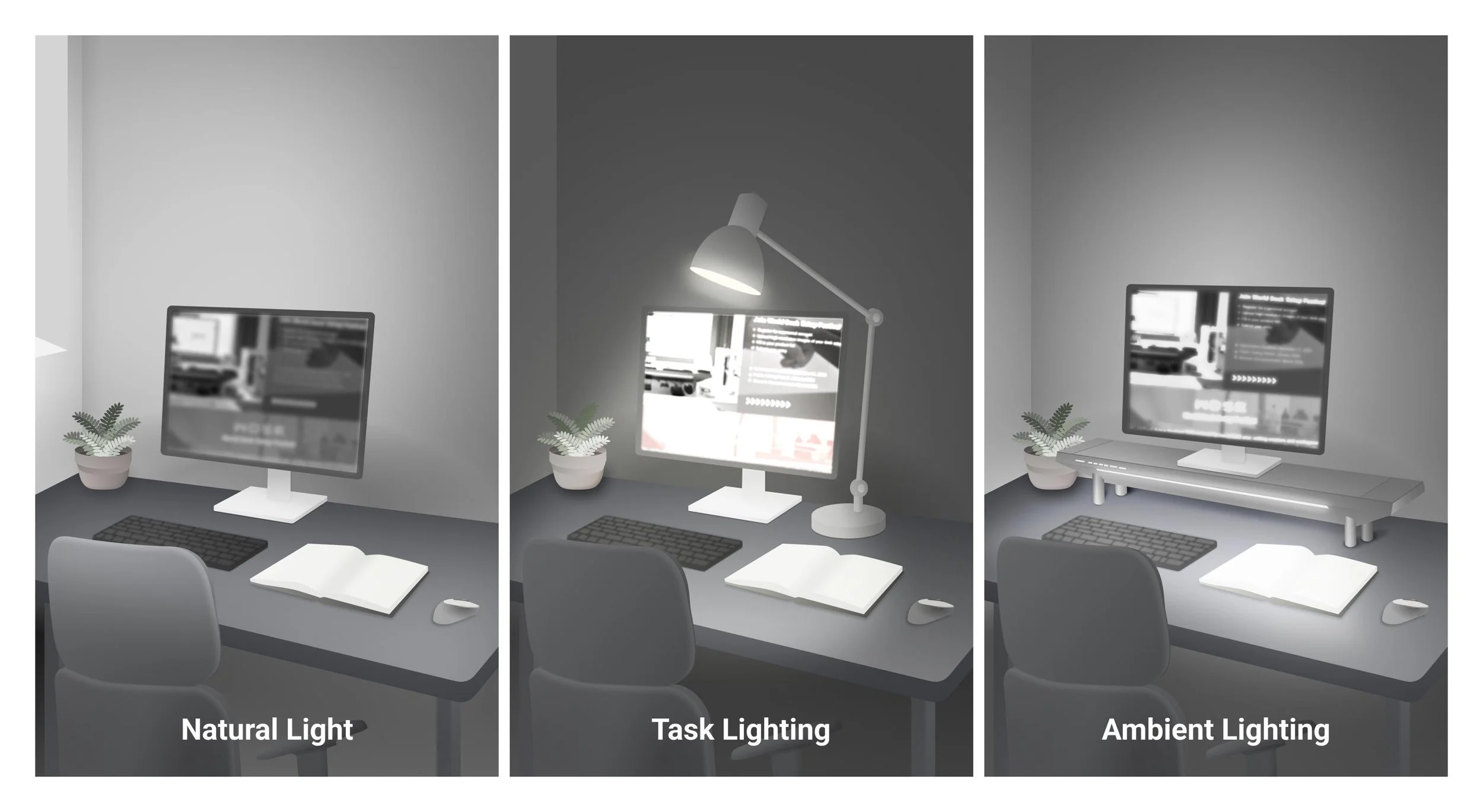
Human-centric lighting resolves this by introducing layered lighting strategies—lower ambient light combined with adjustable task lighting—allowing individuals to tailor their environment to the task at hand. This is where its value becomes tangible: not in how a space looks, but in how effectively people can operate within it.
The impact on focus and cognitive performance
Lighting plays a direct role in how well people concentrate.
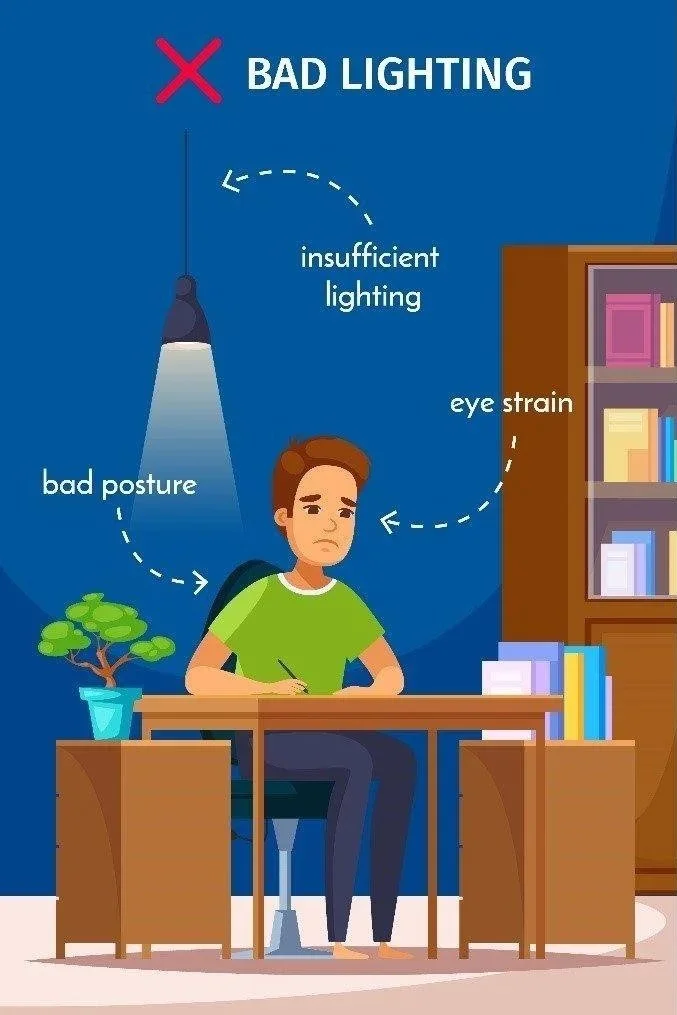
When visual conditions are misaligned with the task, the brain compensates—working harder to process information, maintain clarity, and avoid discomfort. Over time, this leads to cognitive fatigue, reduced accuracy, and shorter attention spans.
Research consistently shows that poor lighting is one of the most common sources of workplace dissatisfaction, with a significant proportion of employees reporting issues such as eyestrain and headaches . In fact, eyestrain has been identified as one of the leading health complaints in office environments.
Human-centric lighting addresses this by:
Reducing glare and contrast imbalance
Providing appropriate illumination at the task surface
Allowing users to adjust lighting based on personal preference
This last point—control—is critical. Giving individuals control over their lighting conditions has been shown to reduce stress and improve comfort, both of which contribute to sustained focus and productivity .
Designing for human variability One of the most overlooked aspects of workplace design is that people do not experience environments in the same way.
Lighting requirements vary significantly with age. As visual acuity declines, the need for light and contrast increases. Research indicates that individuals in their 60s may require up to 250% more contrast than those in their 20s to perform the same visual tasks effectively .
A standardised lighting approach cannot accommodate this variation.
Human-centric lighting, by contrast, introduces flexibility. Through adjustable intensity, direction, and proximity, it allows each individual to create conditions that suit their own visual needs—whether they require higher illumination for detail work or reduced brightness to minimise glare.
This becomes particularly important in multi-generational workplaces and in environments where precision is critical.



The performance case: energy and efficiency While the human benefits of improved lighting are clear, the commercial case is equally compelling.
By shifting from uniform overhead lighting to a combination of ambient and task lighting, organisations can significantly reduce energy consumption. Studies have shown that this approach can deliver energy savings of up to 60%, alongside substantial reductions in lifecycle costs .
The principle is simple: instead of lighting an entire space to the highest required level, light is delivered only where and when it is needed.
This not only reduces energy usage but also improves overall lighting quality, as illumination is more precisely aligned with the task.

Where human-centric lighting delivers the most value
Despite its benefits, human-centric lighting is not necessary everywhere.
Its value is most evident in environments where performance is closely tied to visual conditions:
Knowledge-driven workplaces, where employees spend long periods working across screens and documents
Technical and R&D environments, where precision and accuracy are critical
Long-duration occupancy spaces, such as control rooms or operations centres
Multi-generational workplaces, where visual needs vary widely
In these settings, the impact on focus, accuracy, and wellbeing is measurable.
By contrast, in transient spaces—such as corridors, circulation areas, or short-stay environments—the return on investment is significantly lower. Here, well-designed ambient lighting is typically sufficient.
A design issue, not a product upgrade One of the most common misconceptions about human-centric lighting is that it is a product solution.
It isn’t.
The effectiveness of any lighting strategy is determined by how it is integrated into the overall design. Too often, lighting is treated as a secondary consideration—added late in the process or value-engineered out entirely. This results in environments where lighting conflicts with layout, furniture, and user behaviour.
To deliver meaningful impact, lighting must be considered early and holistically. It should be aligned with:
Spatial planning
Furniture layouts
Technology integration
User behaviours and workflows
Only then can it function as intended: not as an aesthetic feature, but as a tool that supports performance.
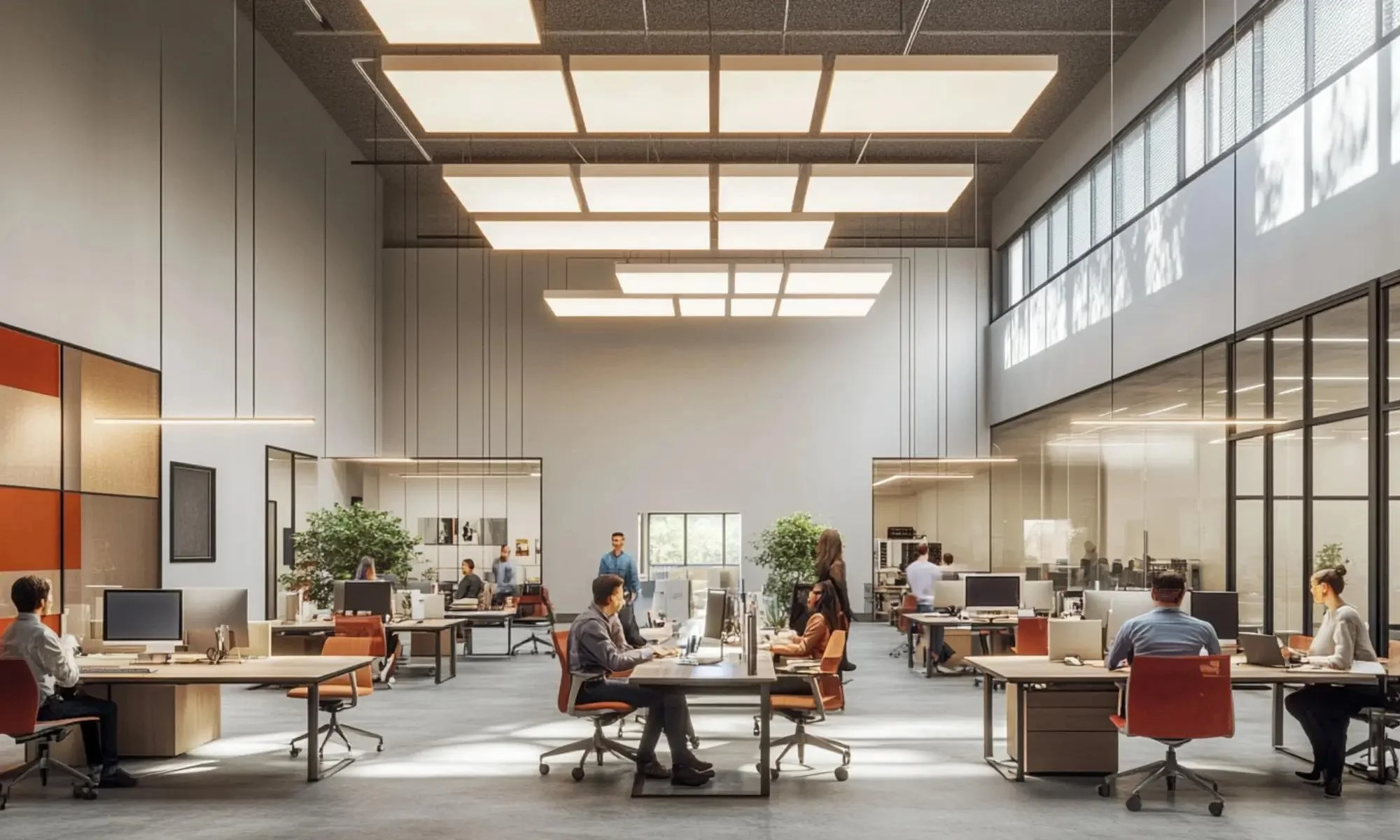



Rethinking lighting as a performance system Human-centric lighting is often positioned as a wellbeing feature. While it does contribute to comfort and satisfaction, its true value lies in performance.
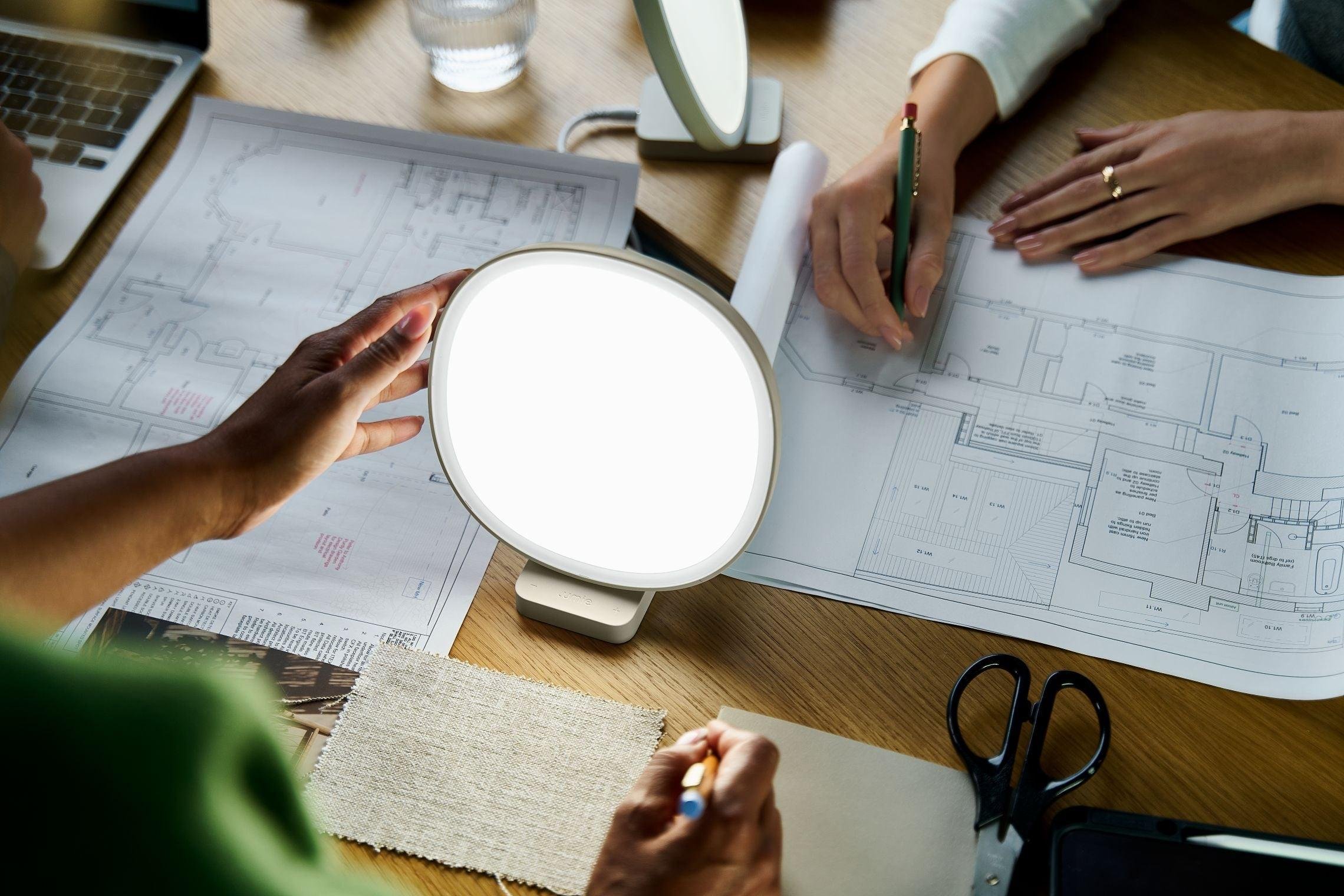
It enables people to work more effectively by aligning the environment with how they see, think, and operate. It reduces friction in everyday tasks, supports sustained concentration, and allows individuals to take control of their own working conditions.
In doing so, it transforms lighting from a passive background element into an active contributor to how a workplace functions.
And in high-performance environments, that shift is not optional—it is essential. At Crux Design Studio, we design environments that don’t just look good — they perform.
Because when the environment works properly, people do too.