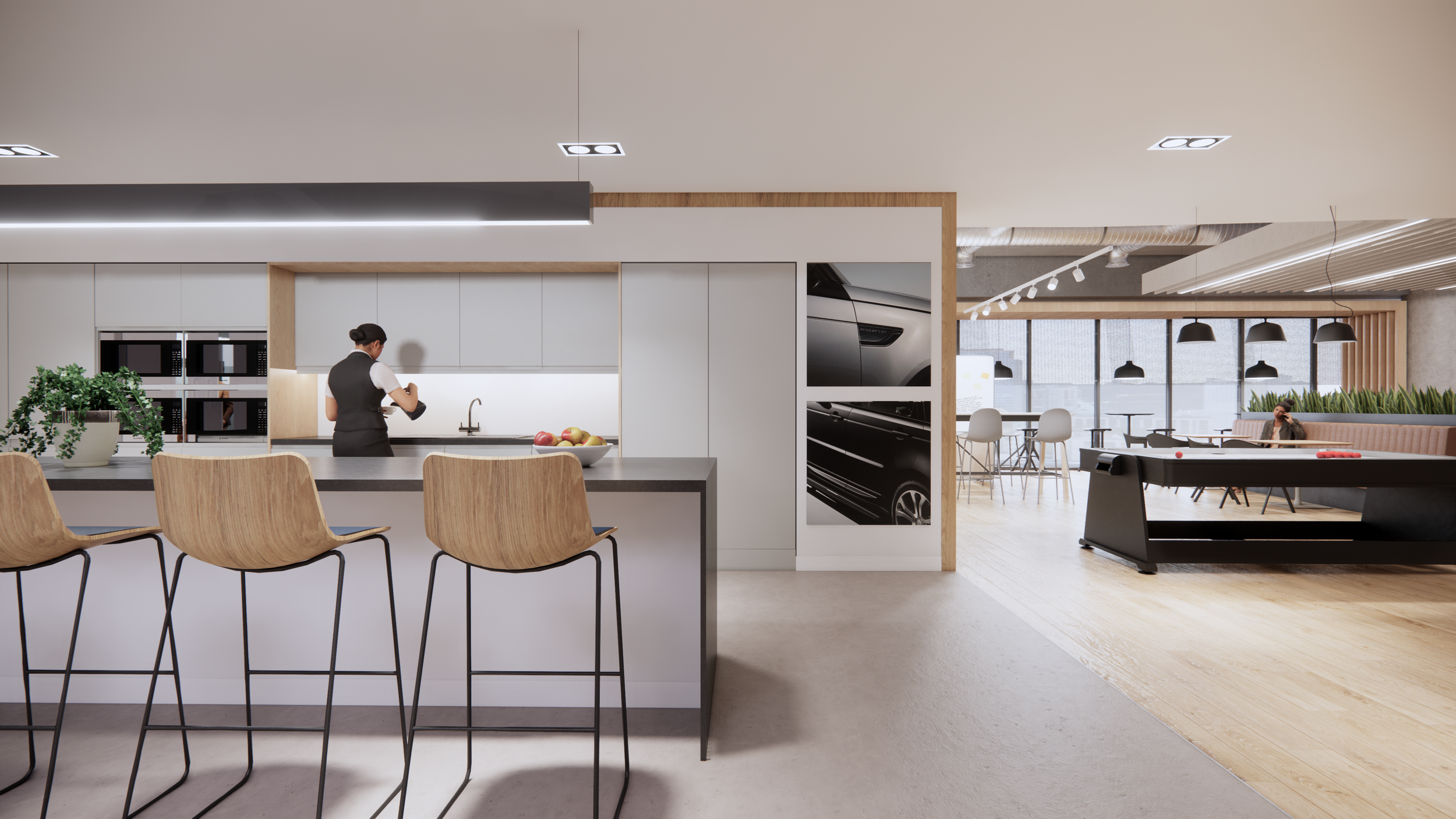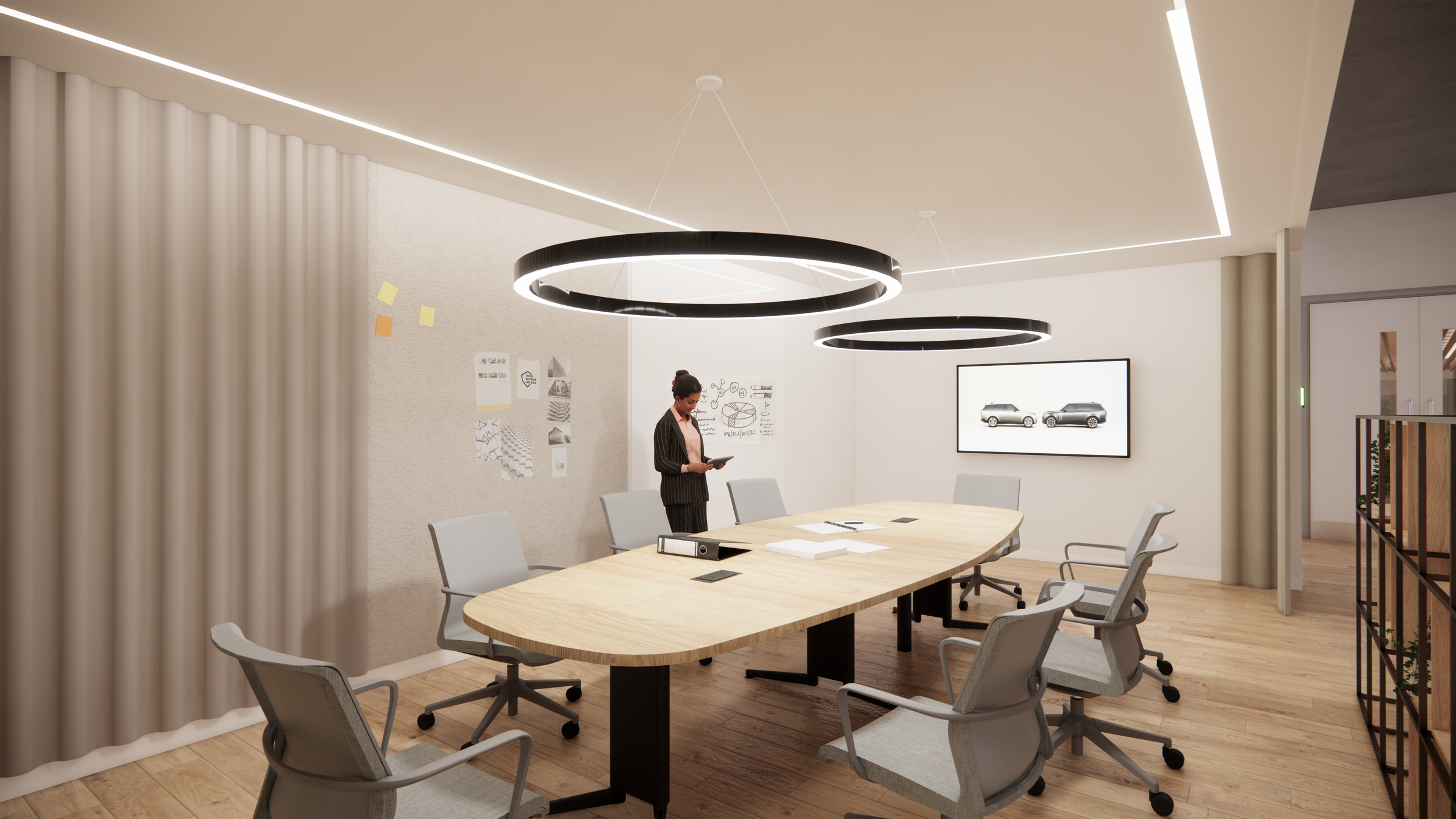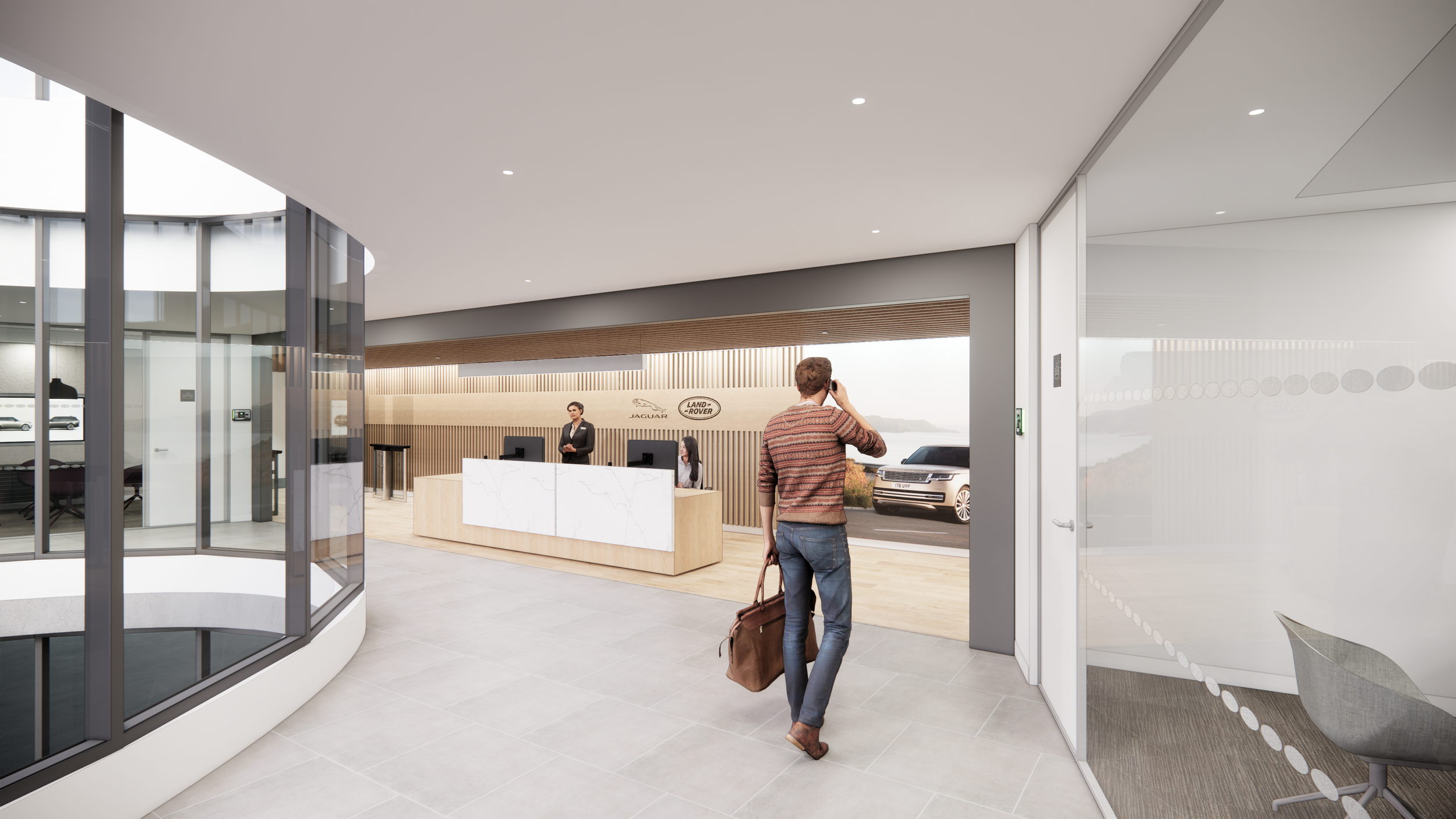
Jaguar Land RoverGlobal portfolio across new build and refurbishment projects
|
|
|
|
Category
Interior Design, Architecture, Global Guidelines
Location
Global
Type
Workplace
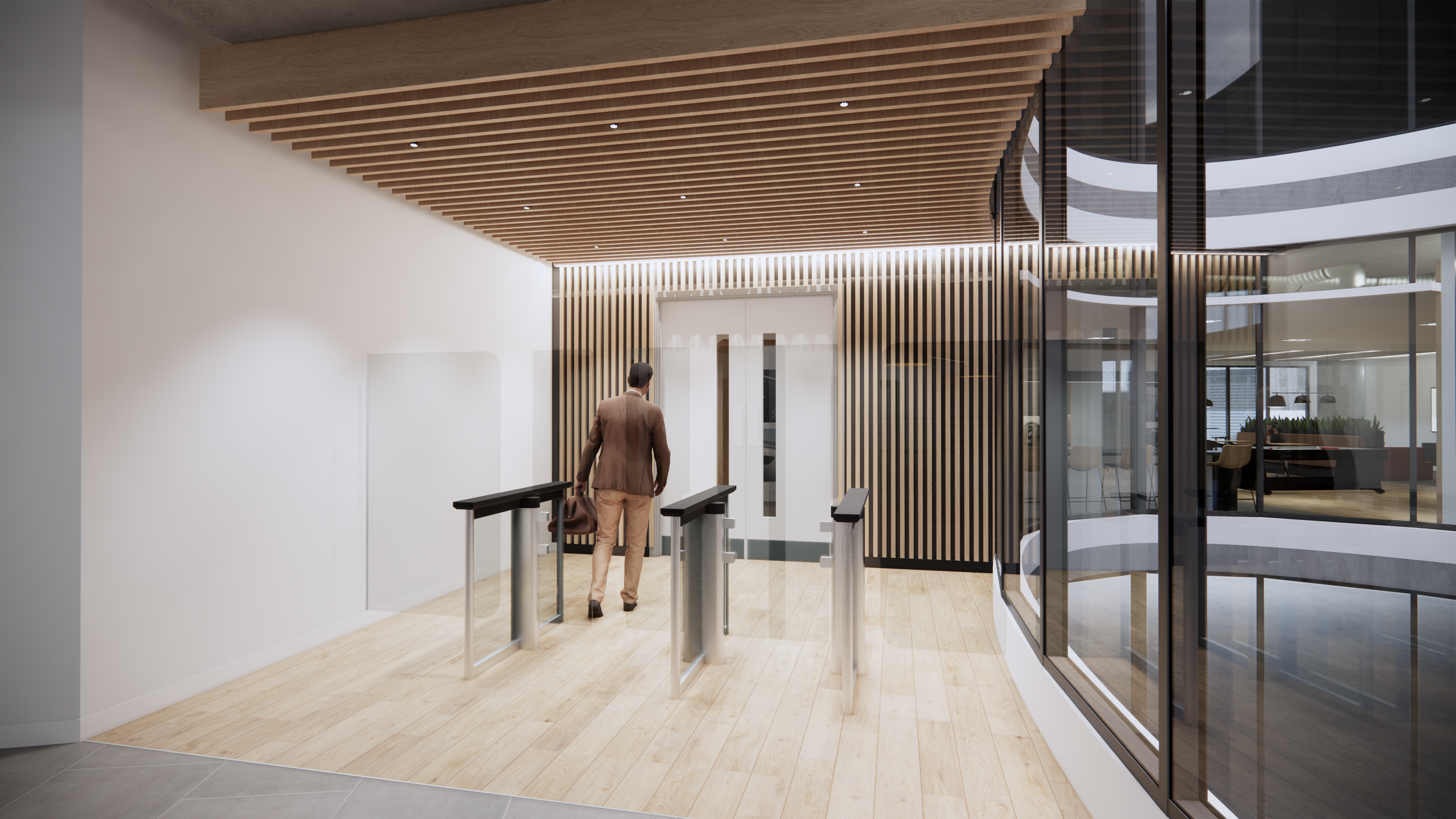
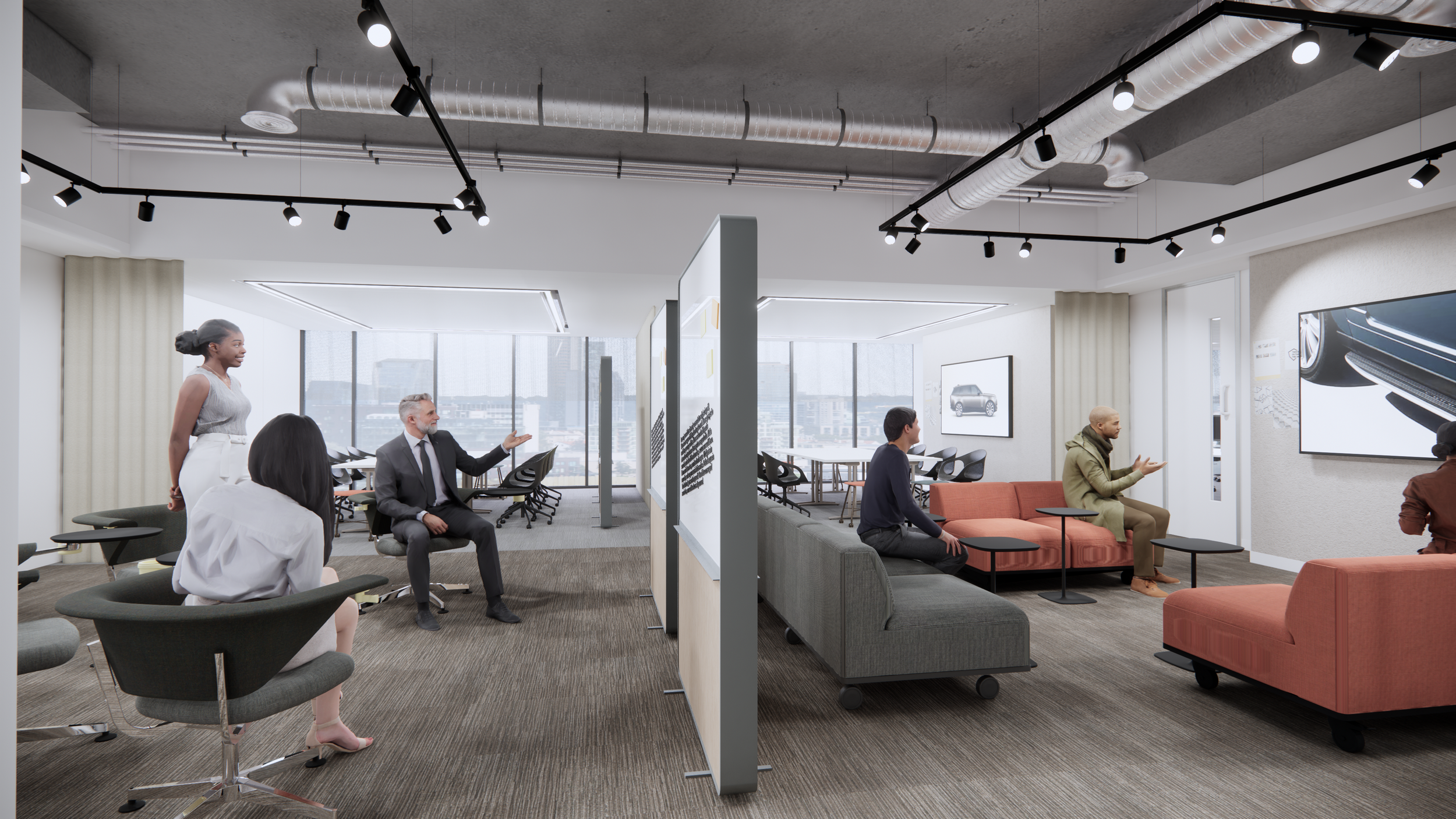
Crux was appointed to lead a comprehensive update of JLR’s Global Design Guidelines, creating a single, coherent operating system for the delivery of workplaces, laboratories, workshops, training academies, cafeterias, and supporting facilities across the client’s global estate.
The appointment responded to rapid international growth, increasing delivery complexity, and the need for greater consistency, cost control, and governance across regions and delivery partners.
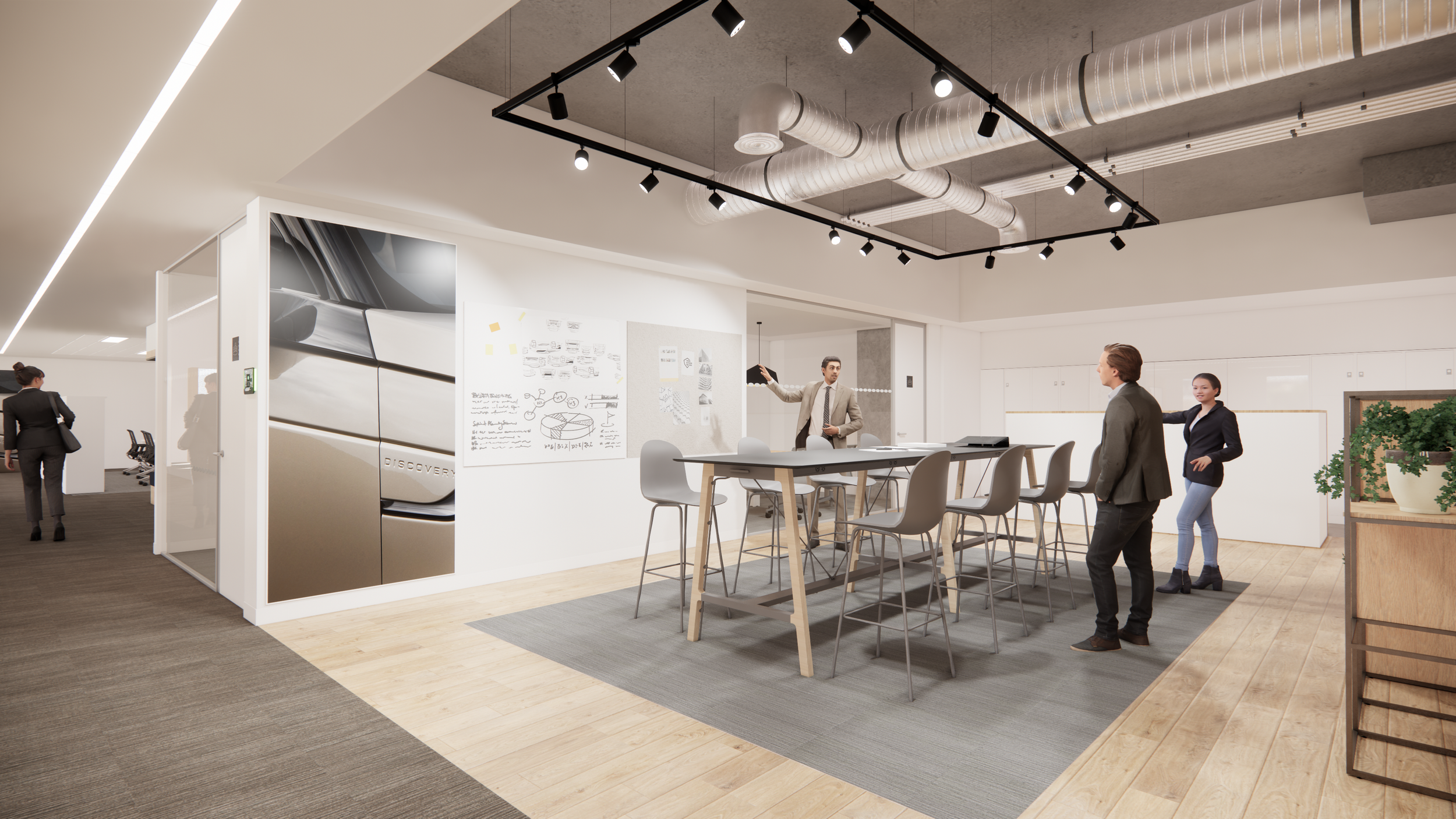
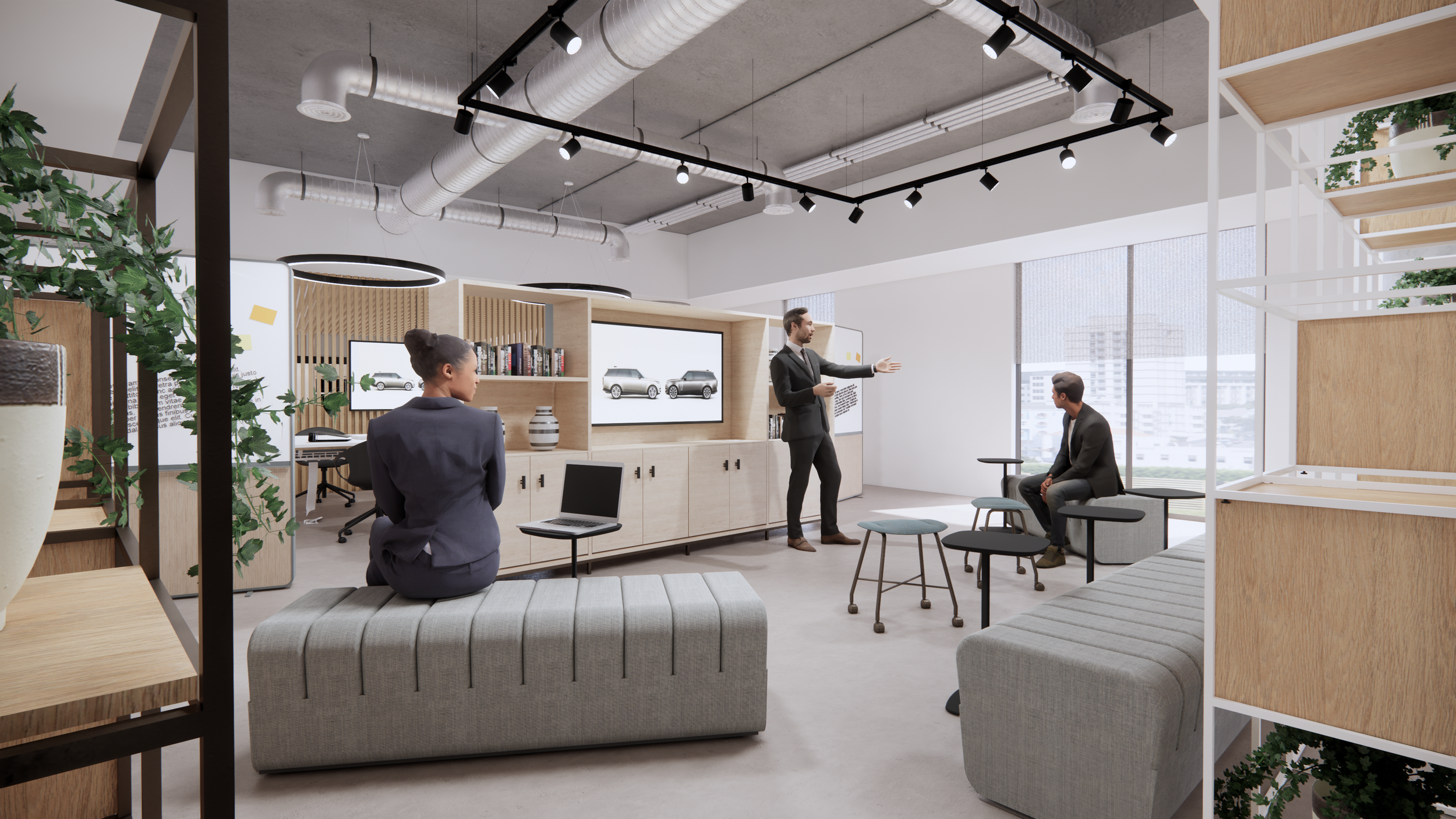
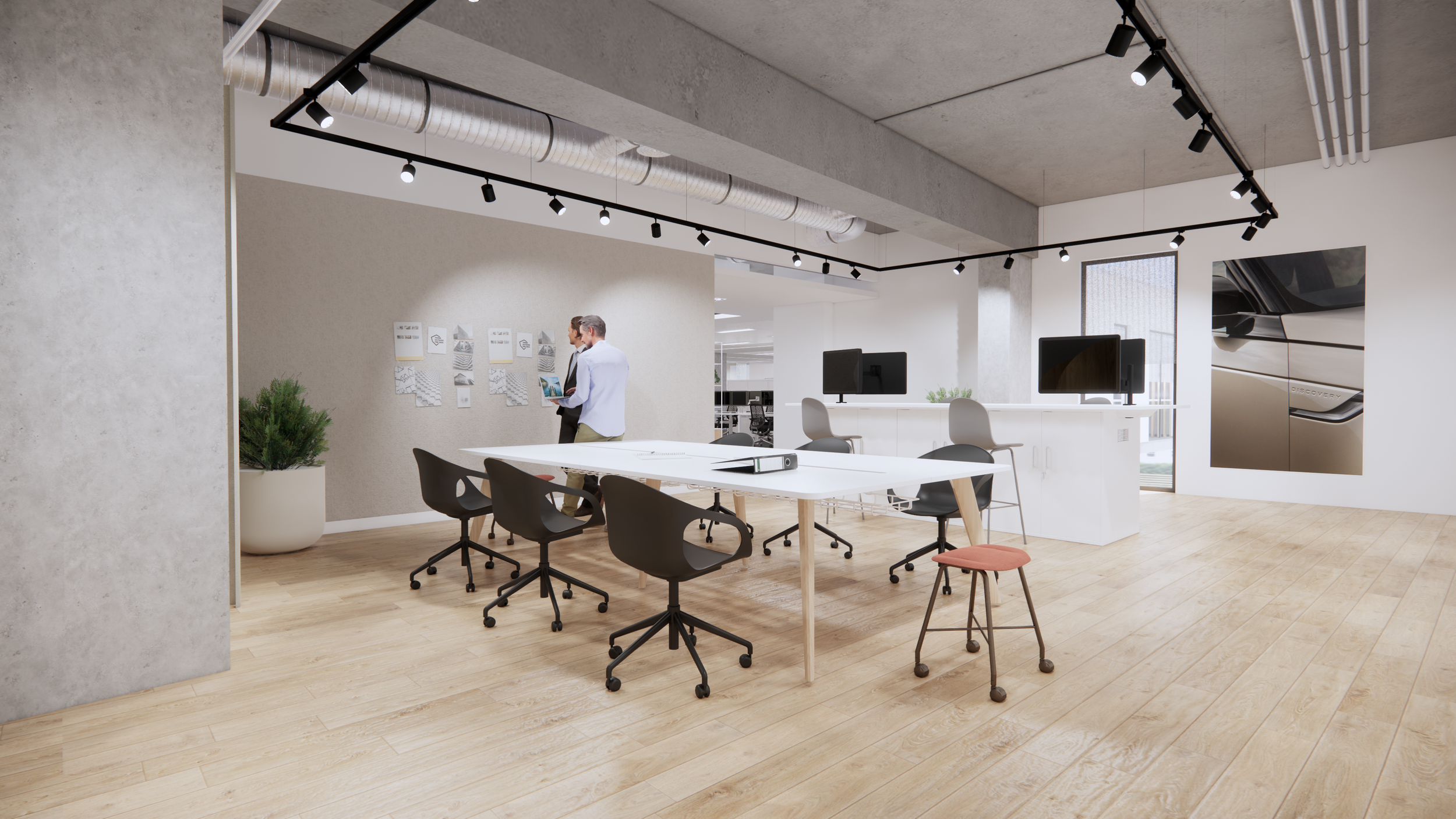
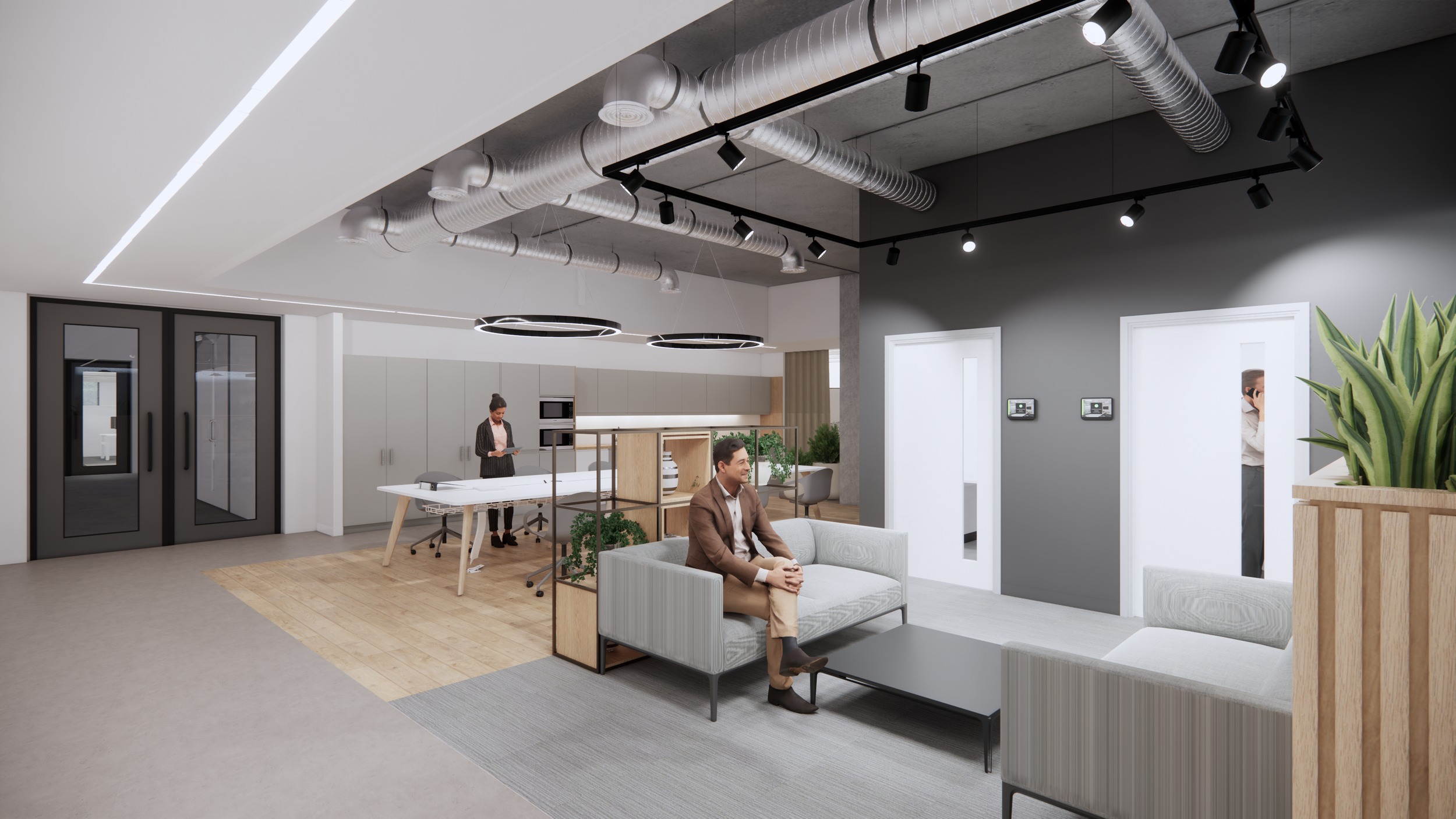
Prior to Crux’s appointment, JLR faced familiar challenges at scale: repeated briefing, inconsistent outcomes between regions, rising costs driven by late decisions, and increasing risk introduced by multiple delivery partners interpreting standards differently.
Projects were frequently treated as standalone “hero” commissions, resulting in unnecessary redesign, duplicated effort, and loss of design intent between strategy and build. JLR required a system that could move quickly, support global rollout, and protect quality without slowing delivery.
Crux approached the guidelines as a strategic delivery tool, not a design manual. Drawing on four years of embedded project experience across multiple large scale JLR sites, the team translated lived knowledge into a clear, repeatable system.
“Projects were frequently treated as standalone “hero” commissions, resulting in unnecessary redesign, duplicated effort, and loss of design intent between strategy and build. JLR required a system that could move quickly, support global rollout, and protect quality without slowing delivery.”
— Heather Saunders, Founder | Principle
Key Features
Global design system covering 13 environment and asset categories
Mandatory standards combined with clear decision-making frameworks
Defined rules for what is fixed and what can flex by region and site
Integrated workplace, laboratory, engineering, and facilities guidance
Designed to accelerate projects while reducing cost and delivery risk
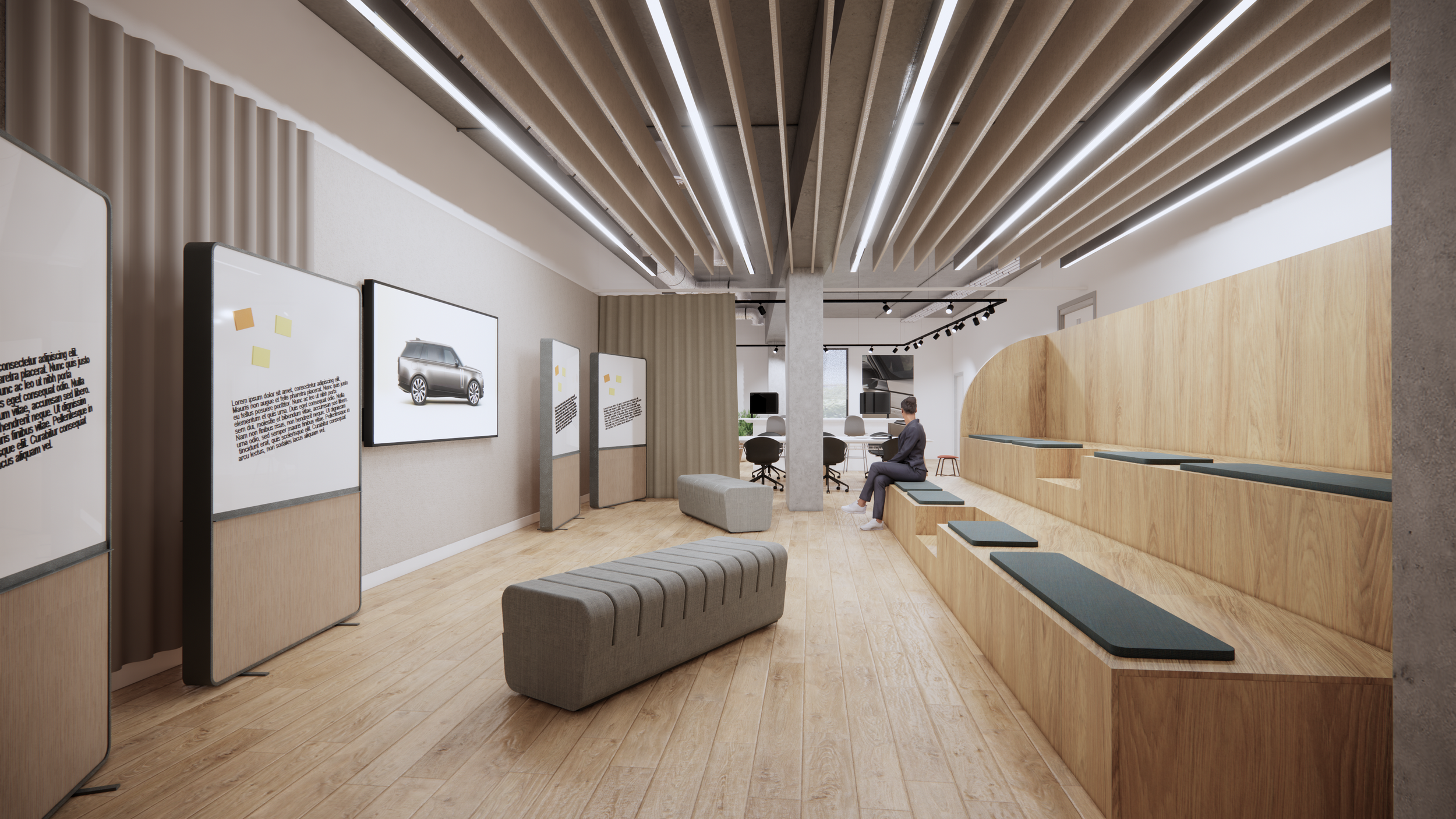

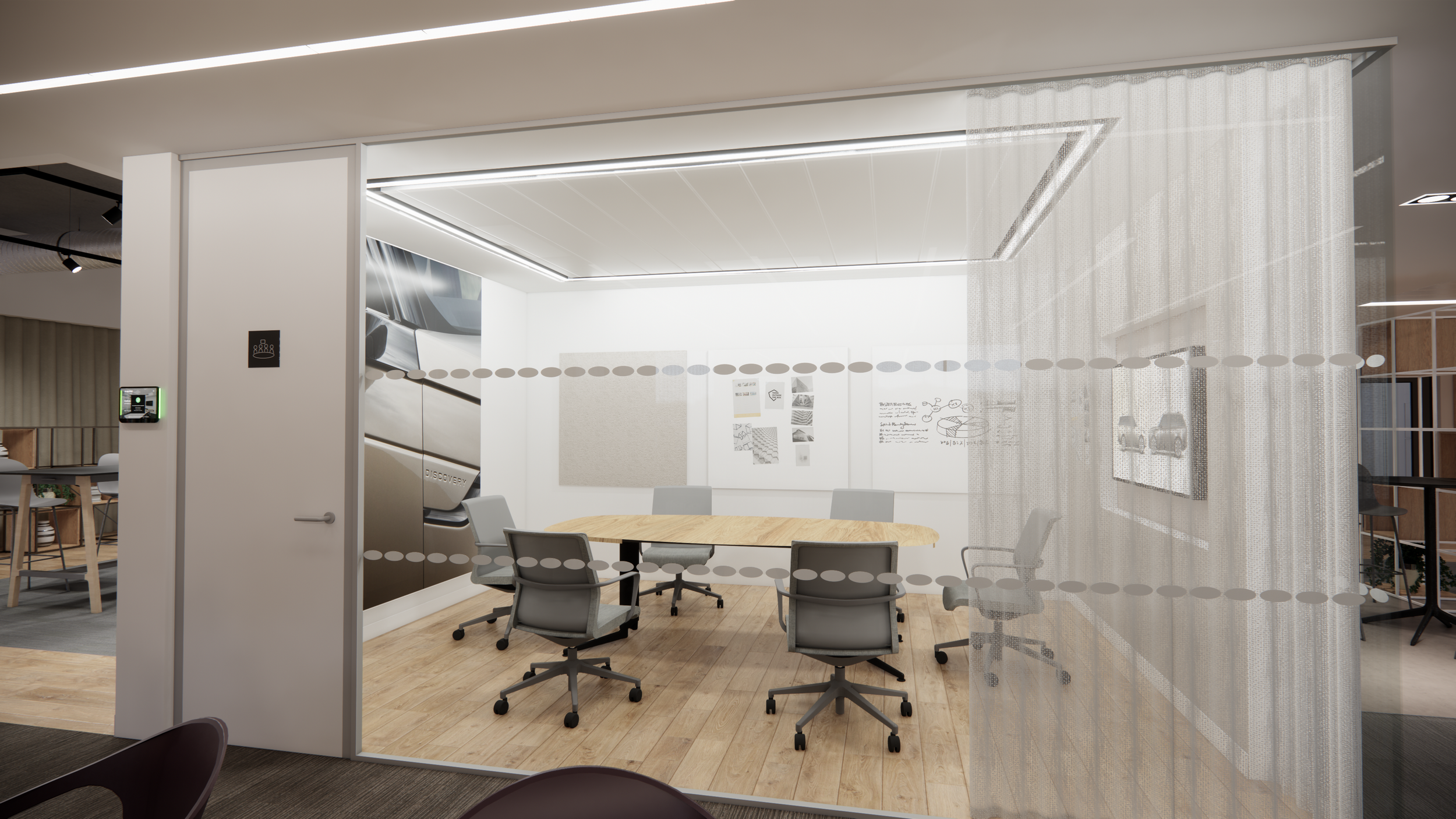
The guidelines were developed through targeted interviews with regional teams, observation of how environments were actually used, and testing against real buildings, constraints, and delivery models. Pilot applications on live projects ensured the guidance was practical, buildable, and commercially realistic.
Crux embedded feasibility led decision making early, integrating workplace, lab, engineering, and facilities standards into a single framework. Governance, procurement support, approval routes, and escalation rules were defined to ensure the guidelines could be confidently used by internal teams, external consultants, and contractors alike.
“Following implementation, JLR experienced faster project mobilisation, improved cost certainty, and more consistent quality across regions. Design rework was reduced, delivery partner performance improved, and alignment between UK and global teams strengthened.”
— Former Client
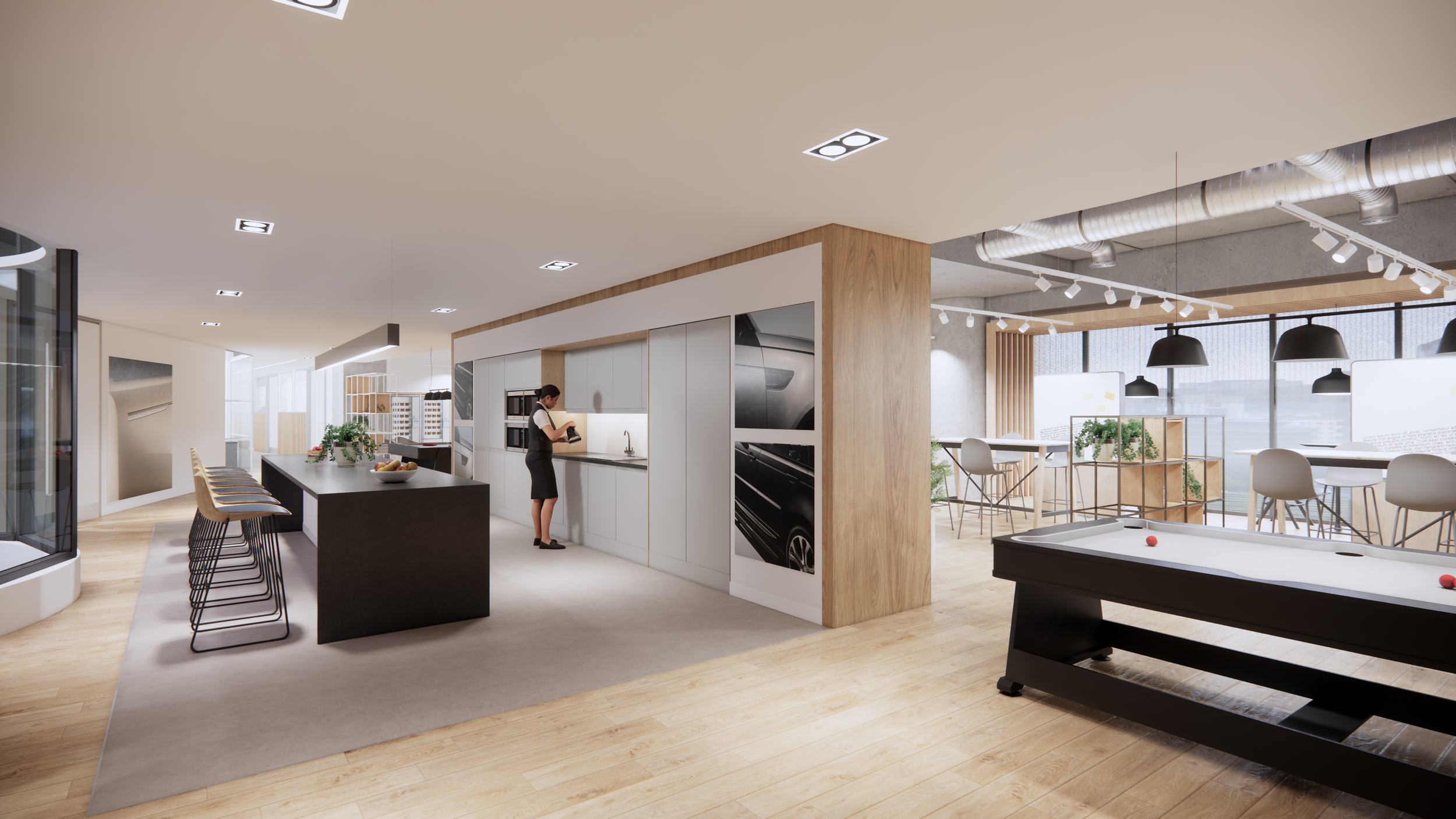
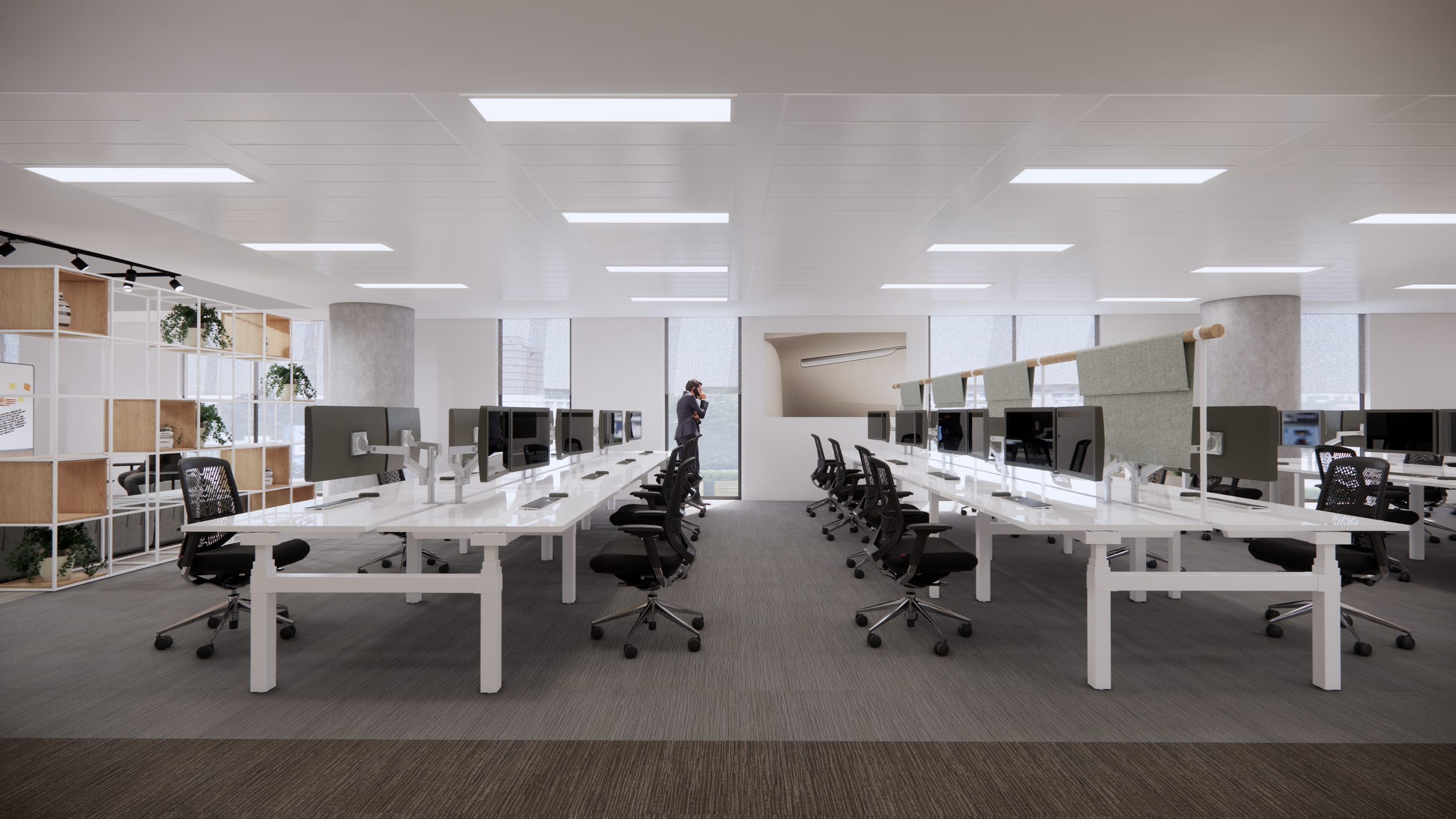
Following implementation, JLR experienced faster project mobilisation, improved cost certainty, and more consistent quality across regions. Design rework was reduced, delivery partner performance improved, and alignment between UK and global teams strengthened.
Risk was significantly reduced at early stages, enabling projects to move forward with greater confidence and fewer late-stage surprises.
These guidelines were different because they transformed a multi year internal effort into a rigorous, globally deployable system in just four months, delivered independently, at speed, and refined through relentless iteration with the right stakeholders rather than the loudest ones.
This project demonstrates Crux’s ability to convert complexity into clarity at portfolio scale, enabling organisations to move faster, spend less, and deliver better environments worldwide.